
Home Exterior Services in Coastal Carolina
Local Fence Contractor Expertise
Fence Installation in Coastal Carolina means working with salt air, coastal winds, and strict HOA rules—especially in communities like Topsail Island, Landfall, and Summerhouse on Everett Bay. We know the local zoning codes, permit requirements, and building conditions that affect every fence project. Whether your goal is privacy, property boundaries, or storm durability, we build fences that stand up to coastal weather and pass local inspections.
This guide covers what to expect, how permits work here, and why local expertise matters when you build a fence in Coastal Carolina.
How We Work
From site inspection to final inspection, every fence starts with understanding your property and local rules.
What's Involved
A solid fence in Coastal Carolina requires planning for salt spray, wind exposure, and code compliance. We guide you through each phase so there's no confusion.
Site Survey & Permits
We verify property lines, check setbacks, and determine which permits your Coastal Carolina property needs. HOA approval is reviewed early.
Material Selection
We recommend materials rated for salt air and coastal wind. Pressure-treated wood, vinyl, and metal options all have coastal-specific advantages.
Installation & Inspection
Posts are set deep for wind resistance. Panels and gates are aligned and fastened to withstand coastal gusts and salt spray.
Final Walkthrough
Your fence passes local inspection, aligns with HOA standards, and meets code. We review everything before handing it over.
You'll always know what's happening next—and when.
Why Coastal Carolina Fences Are Different
Salt Air & Corrosion Resistance
Coastal Carolina sits near the Atlantic, meaning salt spray accelerates rust on untreated metal and shortens wood life. Posts, hardware, and fasteners need hot-dip galvanizing or stainless steel to survive. We spec materials built for this environment.
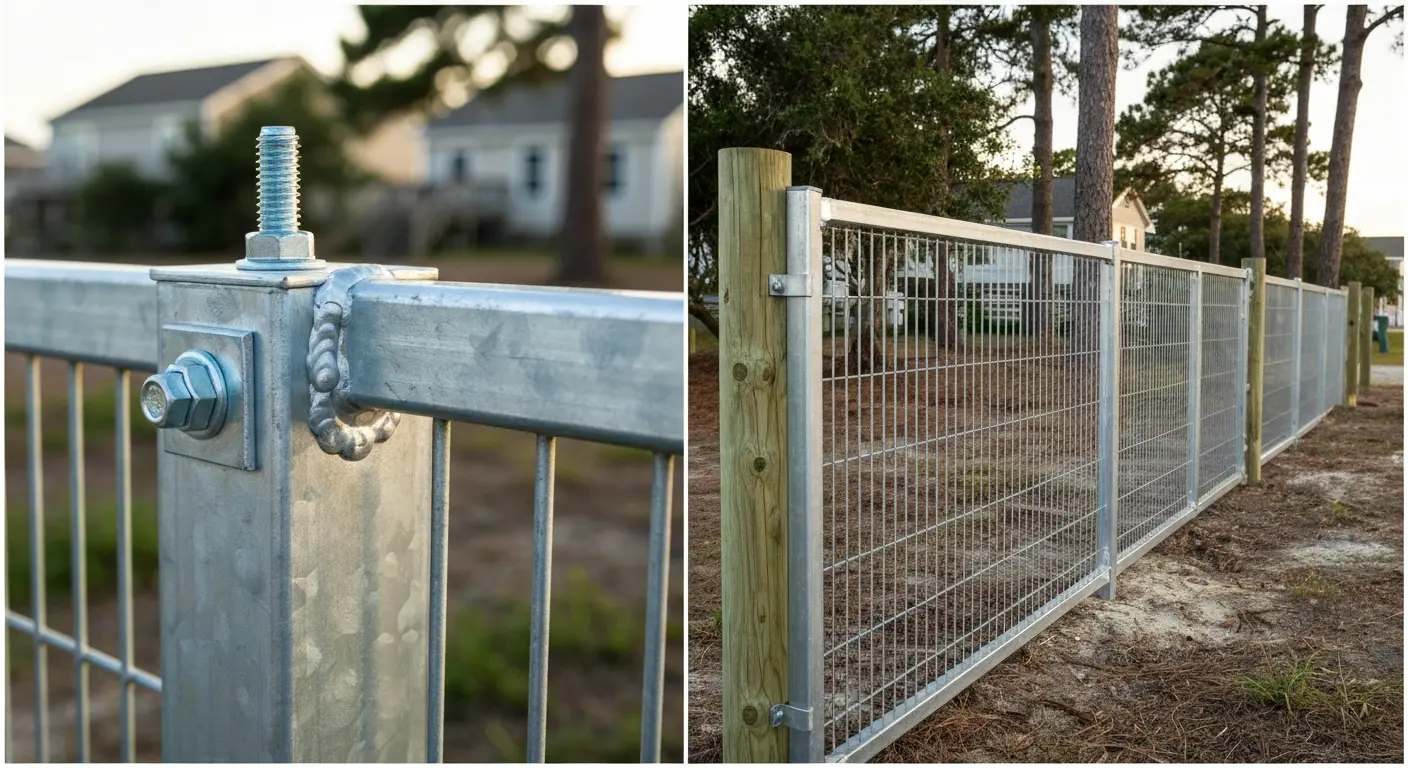
Galvanized fasteners resist salt-air corrosion common in Wilmington and Topsail areas.
Coastal Wind & Structural Load
Coastal Carolina building codes require posts set deeper and stronger than inland standards. Our fence designs account for 130–150 mph design wind speeds. Posts are anchored 3–4 feet deep with reinforced footings.
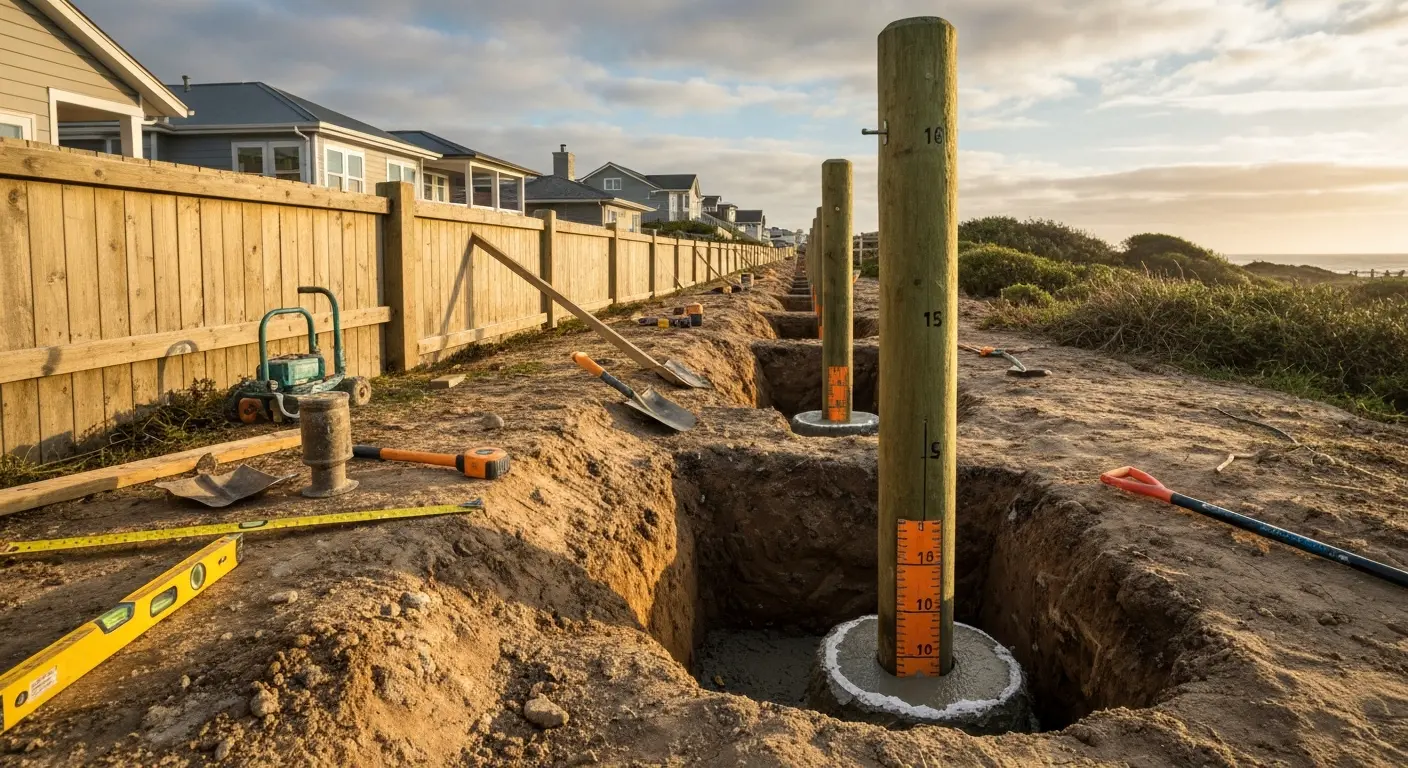
Reinforced post depth protects fences during seasonal coastal storms.
Most rear and side fences in Coastal Carolina can reach 6 feet; front yards are limited to 4 feet by local code. HOA rules may be stricter—especially in deed-restricted communities like Landfall and Compass Pointe.
HOA & Permit Navigation
Gated communities in Coastal Carolina (Summerhouse, Bluffs on the Cape Fear, Oyster Harbour) often require HOA architectural approval before local permits. We coordinate with your HOA, verify setback rules, and submit the right documentation to speed approval.
HOA Design Review
We request approval letters early, confirming height, material, and color align with community standards.
Property Survey
We help arrange surveys to confirm lot lines and prevent boundary disputes. Critical in dense neighborhoods.
Local Zoning & Setbacks
Setbacks typically require 1–2 feet from property lines unless the fence is shared with a neighbor's consent.
What Homeowners Ask
Do I need a permit for my fence in Coastal Carolina?
Yes, most Coastal Carolina municipalities require permits. Unincorporated areas and cities like Wilmington, Surf City, and Holden Beach have zoning rules for fence height, placement, and materials. If your property is in a flood plain or near public easements, additional approval may be needed.
How tall can my fence be?
Rear and side fences are typically allowed up to 6 feet. Front yard fences are capped at 4 feet to maintain sight lines. Gated communities like Landfall and Summerhouse may have stricter limits of 5 feet or lower. Always check your HOA covenants.
What materials hold up best in Coastal Carolina?
Pressure-treated wood (rated for coastal use), vinyl, and galvanized metal resist salt air and moisture. Cedar can work if sealed annually. Avoid untreated wood or bare chain-link in visible areas—HOAs typically prohibit them in deed-restricted neighborhoods.
What if my property is in an HOA?
Contact your HOA board or management company first. Approval often takes 2–4 weeks and may require design details, material samples, and a site plan. We handle HOA coordination as part of our service.
Do I need a property survey before building?
Not required by law, but strongly recommended. A survey confirms exact property lines and prevents boundary disputes. Many HOAs require a recent survey before approving your fence design.
How far from the property line must the fence be set?
Most Coastal Carolina areas require 1–2 feet of setback from the property line. Some allow building directly on the line if you have written neighbor consent. Always verify local zoning before installation.
Serving Coastal Carolina Communities
We work throughout Coastal Carolina, from Wilmington and Topsail Island to Holden Beach and the Cape Fear region.
Wilmington & Surrounding Areas
We handle residential and commercial fence projects in Wilmington proper, plus neighborhoods like Landfall, Porters Neck, and Carolina Beach.
Topsail Island Communities
Summerhouse, East Wynd, and Surf City all have HOA rules. We coordinate approval and build to strict coastal standards.
Cape Fear Region
Bluffs on the Cape Fear, Holden Beach, Oak Island, and Oyster Harbour are served with the same care and coastal expertise.
Why Local Knowledge Matters
Every Coastal Carolina fence project involves unique conditions. Salt spray intensity varies by proximity to the Atlantic. Wind ratings differ by zone. HOA rules vary across neighborhoods. We've navigated permit systems in Wilmington, Surf City, Holden Beach, and surrounding jurisdictions. We know which materials pass design review, which contractors are licensed by the South Carolina Residential Builders Commission, and how to avoid costly delays.
500+ Coastal Carolina fences installed | 20+ years local experience | Full permit coordination included
Get Started
Ready to install a fence in Coastal Carolina? Call for a site inspection and free estimate. We'll walk through code requirements, HOA steps, and material options with no pressure.
Fence Installation in Coastal Carolina is our specialty. Let's build something that lasts.
DISCOVER WHAT OUR CUSTOMERS HAVE TO SAY ABOUT US
REVIEWS
proudly serving these areas
Coastal Carolina
Georgetown County, SC
Horry County, SC
Pender County, NC
Brunswick County, SC
READY TO take the next step?
get a free quote TODAY!
QUICK LINKS
our services
service areas
operating HOURS
Mon: 8:00 am - 5:00 pm
Tue: 8:00 am - 5:00 pm
Wed: 8:00 am - 5:00 pm
Thu: 8:00 am - 5:00 pm
Fri: 8:00 am - 5:00 pm
Sat: Closed - Closed
Sun: Closed - Closed